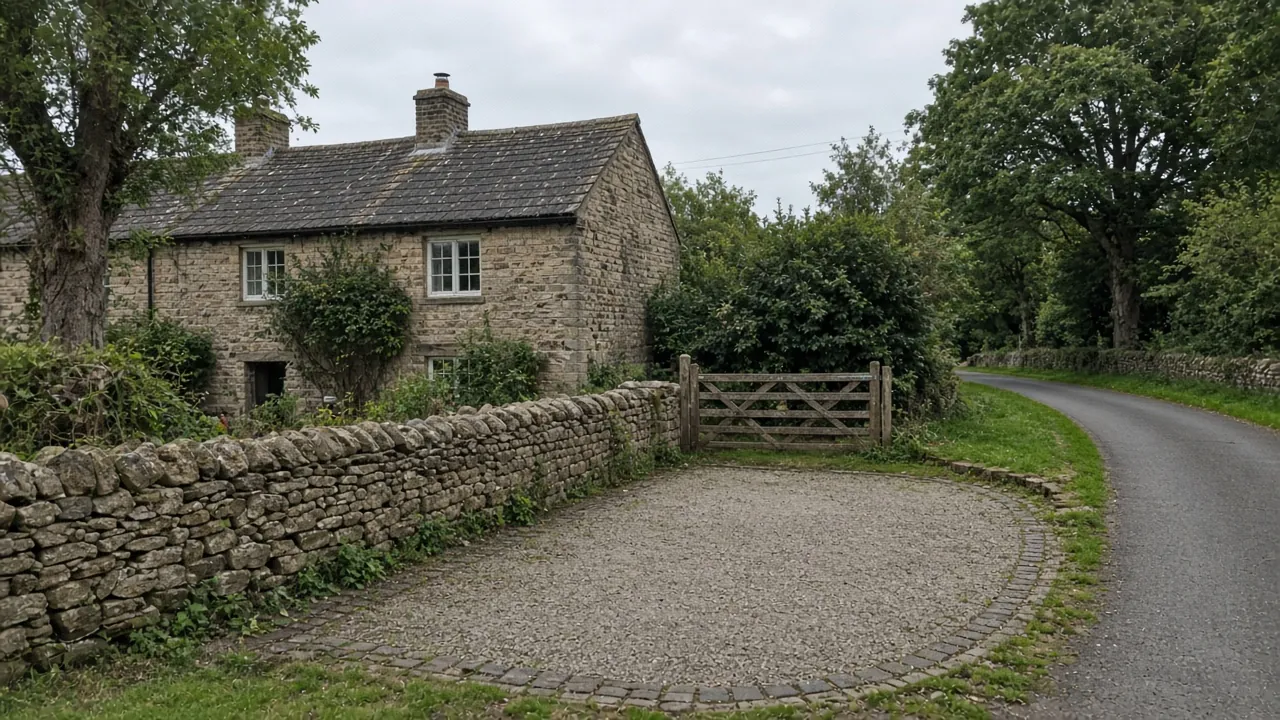
What Stainton and Thornton homes usually need from a driveway
Stainton sits on Middlesbrough's south-western edge in the TS8 postcode, with Hemlington to the east and the A19 corridor and Ingleby Barwick to the west. Thornton is a smaller village a short distance away, across Stainton Beck. Together they form the Stainton and Thornton civil parish and ward, which is part of Middlesbrough borough even though it still feels like countryside.
Stainton is an old settlement. It appears in the Domesday Book of 1086, and its name means "stone town". The Church of St Peter and St Paul dates back to the twelfth century and is Grade II* listed. Captain Cook's parents were married there in 1725. The village has a Methodist church of 1840 on Meldyke Lane and an 1844 school building that is now the Memorial Hall. Stainton Quarry, between the two villages, is now community-run green space.
Homes here fall into three rough groups, and each brings different driveway questions.
Older village properties. Cottages, former farm buildings and older houses in the village cores often sit behind stone or brick walls, hedges or narrow front gardens, sometimes right on the lane. Parking may be at the side or rear, through a gateway. The challenge is fitting a car without losing the character that makes the street attractive, and without falling foul of conservation controls.
Post-war and later family homes. Infill and edge-of-village houses usually have a front garden and a drive to a garage. Typical jobs are replacing a tired concrete or tarmac drive and widening for a second car.
Larger detached homes. Bigger plots carry long drives, turning areas and gates. Durability, drainage and a finish that suits a semi-rural setting matter most here.
Things that crop up in Stainton and Thornton:
- Walls and gateways. Widening a gateway through an old wall, or removing a wall altogether, can need consent in a conservation area and has to be done carefully.
- Verges and lanes. Some village lanes have grass verges, no formal footpath or narrow pavements. Any crossing over a verge or footway still needs the council's licence.
- Water and the beck. Stainton Beck runs between the villages. Water from a new hard surface should go into your own ground, not onto the lane, where it can cause puddles and ice.
- Mature trees and hedges. These are part of the village character. Plan drives around roots and avoid cutting through established hedges without checking.
A survey should look at how the drive meets the lane, how water drains now and whether any boundary needs to change, because those points decide both the design and whether permission is needed.
How much does a driveway cost in Stainton and Thornton?
Village plots vary widely, from a small parking bay beside a cottage to a sweeping drive. Using Checkatrade's April 2026 UK averages:
| Surface | Per m² | 30m² family home double | 50m² village frontage |
|---|---|---|---|
| Gravel | about £60 | about £1,800 | about £3,000 |
| Tarmac | about £90 | about £2,700 | about £4,500 |
| Block paving | about £100 | about £3,000 | about £5,000 |
| Resin bound | about £120 | about £3,600 | about £6,000 |
Per-m² rates from the Checkatrade driveway cost guide, April 2026; the area columns multiply them. Natural stone setts, reclaimed materials and handmade edging cost more than these averages.
Extras that commonly apply here:
- Gateway and wall work. Rebuilding or reusing stone or brick, piers and coping is skilled work and priced separately.
- Access for machinery. Narrow gateways and lanes can mean smaller machines, more hand work and more trips.
- Drainage. A soakaway sized for clay, or a gravel margin, to keep water off the lane.
- Edging in natural materials, such as stone setts or reclaimed brick, which suit the setting better than concrete kerbs.
- Dropped kerb works. Middlesbrough Council's 2026/27 fees are £25.50 for the assessment and £173.40 for the licence, plus construction, which UK guides put at around £1,800 for a new crossing.
Which driveway surface suits a Stainton or Thornton home?
In a village setting, materials that look natural and age gracefully usually work best.
Gravel is the traditional village choice. It suits older properties, sits well against stone and brick, drains naturally and costs the least. A stabilising grid stops ruts, and a bound apron at the lane keeps stones in. Warm, local-looking stone colours look better than bright white chippings. More on gravel driveways.
Resin bound in natural gravel tones gives a similar look to gravel with a solid, tidy surface. It is permeable and suits larger detached homes. Bordering it in stone setts or reclaimed brick helps it sit in a rural street. More on resin driveways.
Clay or tumbled block paving in muted reds and browns suits brick homes and can be laid with a cobbled-look border. Concrete blocks in bright colours can look out of place in the village cores. More on block paving.
Tarmac is practical for long private drives and lanes, especially where cars turn a lot. A stone or brick edge improves the look. More on tarmac driveways.
Conservation, planning and dropped kerbs in Stainton and Thornton
Stainton and Thornton Conservation Area. Middlesbrough Council lists Stainton and Thornton as one of its conservation areas. In a conservation area, extra controls can apply to demolishing walls and gates, and the council looks at whether changes preserve or enhance the area's character. If your home is in or near the conservation area, speak to Middlesbrough Council's planning team before removing a wall, widening a gateway or paving a front garden, and before choosing materials. Listed buildings, such as the church and some older houses, need listed building consent for works affecting them.
Front-garden surfaces. Since October 2008, more than five square metres of impermeable surface on a front garden in England that drains onto the road needs planning permission. Gravel, resin bound and permeable block paving avoid this, as does draining onto your own land.
Dropped kerbs and verge crossings. Any new or widened access across a council footway or verge needs a vehicle pavement crossing licence from Middlesbrough Council before work starts. Email highwaylicences@middlesbrough.gov.uk. The 2026/27 fees are £25.50 for the assessment and £173.40 for the licence, each with 14 days' notice. Work must be carried out by someone with £5 million public liability insurance, built to the council's specification and maintained for two years. More on our dropped kerbs page.
Areas near Stainton and Thornton
Driveway information is also available for Hemlington and Coulby Newham to the east, Brookfield and Acklam to the north, and Ingleby Barwick to the west across the A19. Ingleby Barwick is covered by Stockton-on-Tees Borough Council; the others are Middlesbrough.
Questions people ask
Is Stainton in a conservation area?
Yes, in part. Middlesbrough Council lists Stainton and Thornton as a conservation area. Check with the council's planning team whether your property is inside the boundary before changing walls, gates or front gardens.
Can I widen my gateway through an old wall?
Possibly, but in a conservation area demolishing part of a wall can need permission. Ask Middlesbrough Council first, and plan to reuse the original stone or brick for new piers.
What driveway looks best on a village cottage?
Gravel in a warm, natural colour, or resin bound in similar tones, edged with stone setts or reclaimed brick, usually suits village properties best.
How much does a gravel driveway cost here?
About £60 per m² on 2026 UK averages, so a 50m² frontage is roughly £3,000 before extras such as wall work, drainage or a bound apron at the lane.
Do I need a licence to cross the grass verge?
Yes. A crossing over a council verge or footway needs Middlesbrough Council's vehicle crossing licence and must be built to the council's specification.
Which council covers Stainton and Thornton?
Middlesbrough Council. The parish is part of Middlesbrough borough, so planning and dropped kerbs go through Middlesbrough.